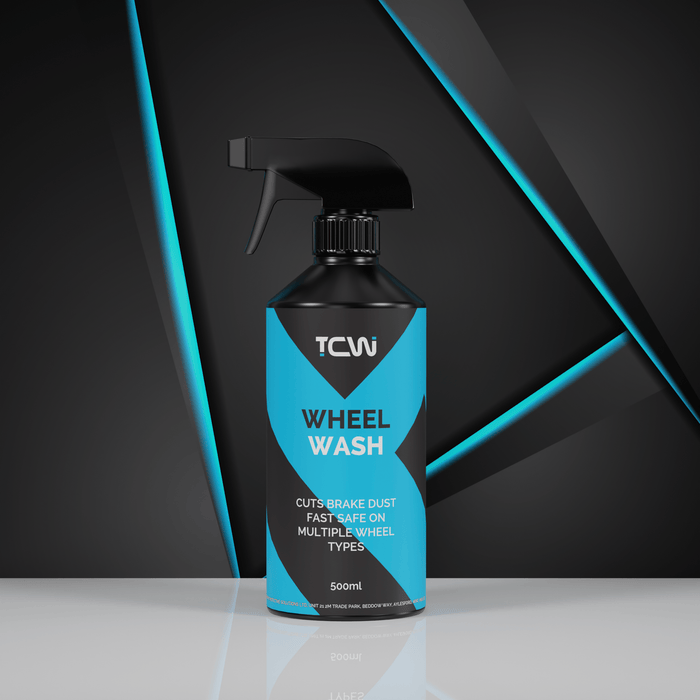
Wheels get filthy faster than anywhere else on the car
Brake dust is hot iron particles that bond to the wheel face every time you stop. Road grime, tar and salt build on top. By the time the rest of the car looks like it needs a wash, the wheels have been ready for one for a week.
A ready-to-use wheel cleaner needs three applications and a lot of scrubbing because it is mostly water. This is concentrated. You mix it strong for caked-on dust or dilute it down for a routine weekly clean. Same active formula, dialled to the job in front of you.
Safe on every wheel finish
Painted, polished, lacquered, anodised and ceramic-coated wheels are all safe at the recommended dilution. Use it on alloy faces, on the inside of the barrel, on tyre walls, on plastic caps. One bottle, every wheel surface.
If you have just had a coating applied, use the weaker 1:5 mix for the first month while it fully cures, then return to the stronger mix as needed.
Concentrated, so it actually lasts
One litre of concentrate cleans up to 33 sets of four wheels. A 5 litre bottle is over 160 wheel cleans, which is months of weekly washes for most drivers. The smaller bottles work out at 41-90p a wheel-set, the 5 litre at 23p. Buy the biggest size you will get through, pay the least per clean.
How to use
Mix in a trigger sprayer or pressure-washer foam cannon. Roughly 1:3 concentrate to water for heavy brake dust, 1:5 for a routine weekly clean.
Spray onto cool, dry wheels. Hot wheels make the cleaner flash off and leave streaks.
Agitate with a wheel brush, working into the spokes and the inside of the barrel.
Rinse off thoroughly with a pressure washer or hose. Do not let it dry on the wheel.
Approximately 300ml of mixed solution per set of four wheels.